
Species Playbook
← Back to all guidesHow to Catch Crappie Near Dams and Tailwaters
Published on: April 12, 2026 · Approx. 8 minute read
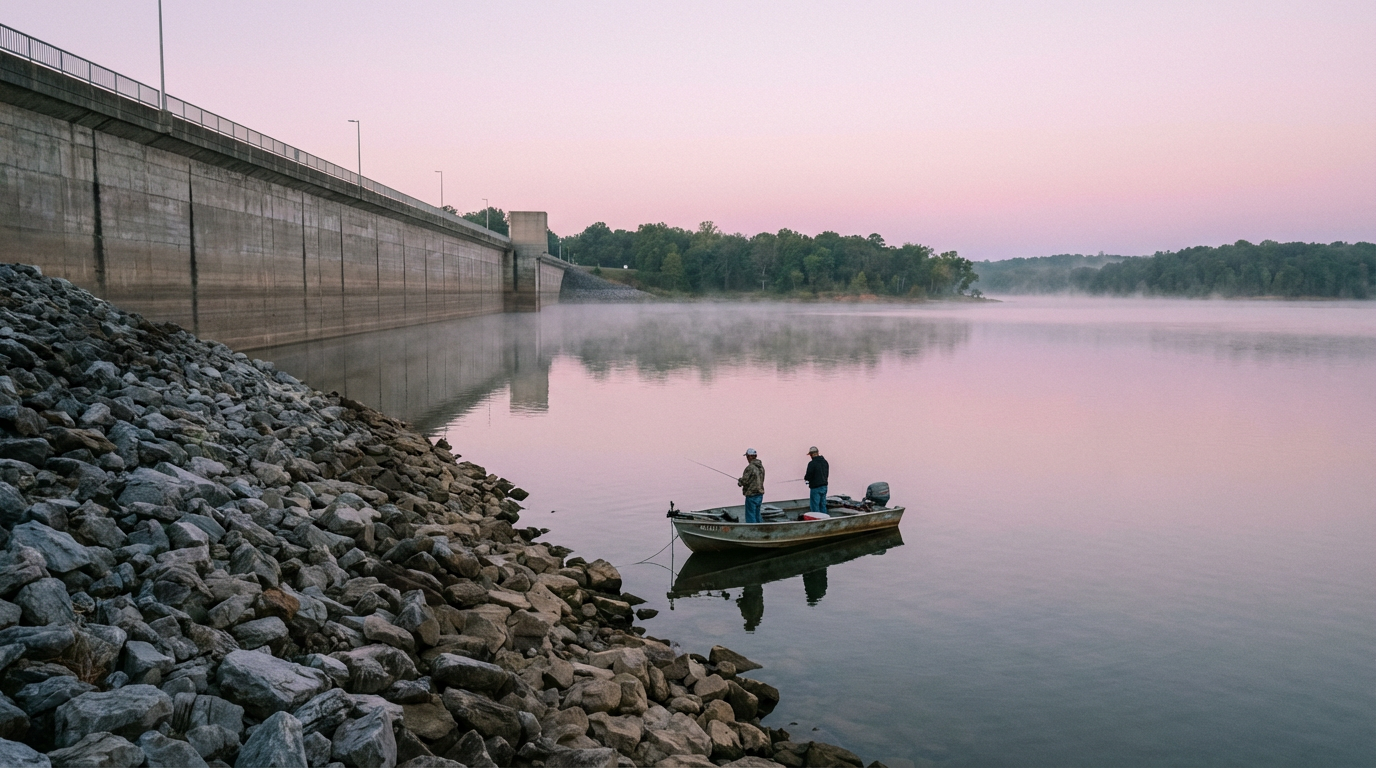
Crappie are one of the most accessible gamefish in freshwater — and dam areas give you two distinct environments to target them: the reservoir itself (especially near the dam face) and the tailwater below, where current concentrates bait and gives crappie an easy meal.
Get the timing and location right and you can fill a livewell in a couple of hours. Here's exactly how.
Above the Dam: Working the Dam Face and Coves
In the reservoir, the area within a quarter mile of the dam is often underutilized by crappie anglers. Key spots include:
- Dam face riprap — the rock sloping into the water holds shade, structure, and baitfish. Crappie stack vertically along these rocks, especially in spring and fall.
- Creek channel swings near the dam — the old creek channel often passes close to the dam before it was impounded. Work the edges of this channel in 10–20 feet of water.
- Brush piles and dock floats — any fixed structure within a few hundred yards of the dam face will concentrate crappie, especially in warming spring water.
Keep an eye on lake level using the Catch Dam Fish lake level tools. When the lake is dropping, crappie move deeper and tighten to channel edges. When it's rising, they push into flooded brush closer to banks — some of the best crappie fishing of the year.
Below the Dam: Tailwater Crappie
The tailwater below a dam is often overlooked for crappie, but it can be exceptional. Crappie hang in tailwaters for the same reasons catfish do — oxygenated water, disoriented baitfish, and structure:
- Eddies behind boulders and wingdams — crappie park in the calm water just behind large obstructions and dart into the current edge to grab passing shad fry.
- Concrete abutment corners — where the tailrace wall meets the bank, current slows and creates a soft pocket. These spots are almost always holding fish.
- Submerged brush in the first pool below the dam — any timber or brush pile in slower water 100–500 yards below the dam will concentrate large numbers of crappie.
Step 1: Time Your Trip Around Generation
Crappie in tailwaters are flow-sensitive. Check the release schedule and plan for these conditions:
- Low or no generation — crappie spread out and are easier to target in eddies and structure. Best for beginners.
- Light to moderate generation — crappie stack tightly on downstream faces of structure, feeding on shad that drift through. Fast action if you find the right eddy.
- Heavy generation — most crappie retreat to slow pockets or drop back to the first wide pool. Focus on the softest water you can find.
Step 2: Proven Crappie Techniques
These methods consistently produce near dams, whether above or below:
- Vertical jigging — drop a 1/16–1/8 oz jighead with a 2" paddle tail or tube straight down into eddies and along structure edges. Crappie often hit on the fall.
- Spider rigging (boat only, above dam) — multiple rods fanned out from the bow while drifting the dam face lets you cover water efficiently and find the depth where crappie are holding.
- Slip float with a minnow — set depth to just above structure or brush and let the float drift through eddies. Deadly for crappie in moderate current.
- Tight-lining a minnow in current — hook a live minnow through the back, add just enough split shot to get it down, and hold it on the upstream edge of structure. Let it swim naturally in the current seam.
Step 3: Lure Colors and Sizes
In tailwaters, shad-matching colors dominate:
- White, pearl, and silver — imitates the shad that wash through turbines. First choice in clear to lightly stained water.
- Chartreuse and yellow — high-vis option for stained or turbid tailwater conditions common after heavy rain.
- Pink and orange — underrated crappie colors that trigger reaction bites in low-light and overcast conditions.
Keep jighead size light — 1/32 to 1/8 oz covers most tailwater situations. Go heavier only when current forces it.
Step 4: Gear for Crappie Around Dams
- 5'6"–7' ultralight or light spinning rod with a smooth drag for the 1–2 lb fish you'll hook on light jigheads.
- 4–8 lb monofilament or fluorocarbon — mono adds a little shock absorption; fluoro is less visible in clear tailwater.
- Thin-diameter braid (6–10 lb) with a fluorocarbon leader if you want extra casting distance and sensitivity.
Best Times of Year for Crappie Near Dams
- Spring (March–May) — the best of the year. Crappie move shallow to spawn, staging first near dam riprap and then pushing into coves and brush. Tailwaters also see feeding frenzies as shad populations increase.
- Fall (September–November) — a close second. Cooling water pushes crappie back to mid-depth structure. Dam face riprap and channel edges near the dam produce consistently.
- Summer — fish deep near the dam face at dawn and dusk. Midday heat pushes crappie to the coolest, most oxygenated water closest to the dam or into tailwater eddies.
- Winter — slow down your presentation and work deeper structure below the dam. Big crappie stack in deep holes and can be caught on slow-sinking jigs.
Plan Your Trip with Real-Time Data
Crappie fishing near dams rewards anglers who pay attention to water conditions. Use the Catch Dam Fish dashboard to monitor lake levels, generation schedules, and flow trends at your favorite dam — so you can time your trips to match the conditions where crappie are most active.