
Conditions & Strategy
← Back to all guidesHow Wind Affects Fishing — and How to Use It to Your Advantage
Published on: April 17, 2026 · Approx. 9 minute read
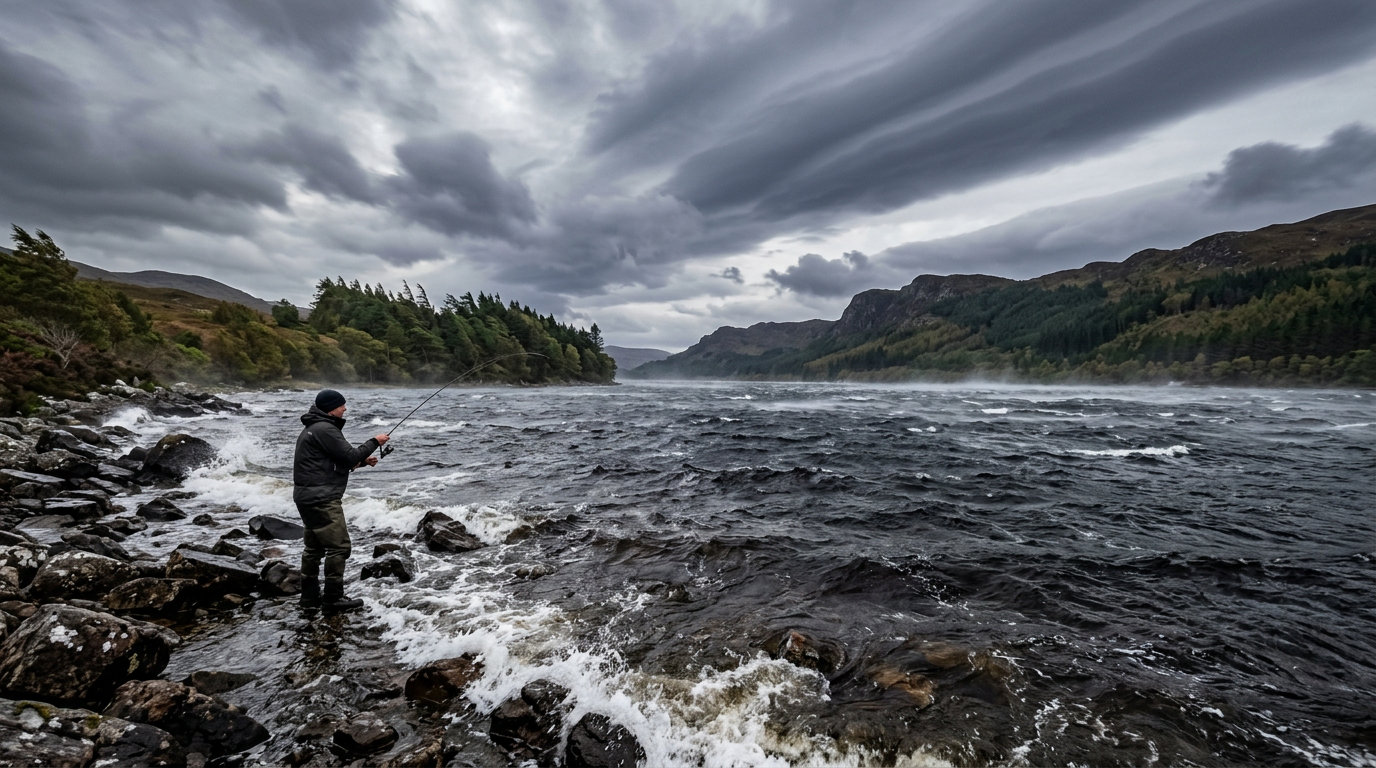
Wind is one of the most misunderstood variables in fishing. Most anglers treat it as an inconvenience — something that tangles your line and ruins your cast. But experienced dam and lake fishermen know that wind is often the trigger that turns a slow bite into a great one.
Understanding what wind does to water, bait, and fish behavior lets you make smarter decisions about where to fish, when to fish, and how to adjust your presentation.
What Wind Actually Does to a Lake or Reservoir
Before digging into tactics, it helps to understand the mechanics. Wind does three things that directly affect fish:
- Piles up baitfish — surface wind pushes the top layer of water toward the downwind shore, carrying zooplankton and small baitfish with it. Predators follow the food.
- Churns up the water column — wave action mixes oxygen into the water and stirs up bottom sediment, dislodging insects, crawfish, and invertebrates that fish feed on.
- Reduces surface visibility — rippled or choppy water breaks up the light penetration that makes fish cautious in flat, calm conditions. Fish move shallower and feed more aggressively because they feel less exposed.
Wind Direction: Why It Matters More Than Speed
Wind direction is the first thing to check — it tells you which shore is receiving the pushed bait and which side has the best conditions.
- Windward shore (the shore the wind blows toward) — this is where bait concentrates. Waves wash insects and small organisms into the bank. Bass, crappie, and white bass often push right up to the shoreline on the windward side, sometimes in surprisingly shallow water.
- Leeward shore (sheltered from the wind) — calmer water here provides refuge for inactive fish. In summer heat, larger fish may use this side to rest, but feeding activity is usually lower.
- Points and channel bends that intercept the wind — wherever wind-pushed surface current meets a point, bluff wall, or creek channel edge, bait stacks up and predators ambush it. These are often the single best spots on a windy day.
Wind Speed: Finding the Sweet Spot
Not all wind is equally productive. Here's a rough guide:
- 0–5 mph (calm) — flat, glassy water. Fish can see everything, including you. They tend to go deeper and feed less actively. Finesse presentations and early morning / late evening windows are key.
- 5–15 mph (light to moderate) — the sweet spot for most freshwater fishing. Enough chop to break surface visibility, bait starts moving toward the windward shore, and fish activity picks up noticeably.
- 15–25 mph (moderate to strong) — excellent fishing if you can manage the conditions. Bass and stripers especially become very aggressive. Use heavier lures to maintain control and fish the protected pockets behind points.
- 25+ mph (strong) — productive fishing is possible but becomes difficult and potentially unsafe. Focus on sheltered coves, bank fish from stable spots, and watch for whitecaps that signal dangerous boat conditions.
How Different Species Respond to Wind
Bass (Largemouth & Smallmouth)
Bass are among the biggest beneficiaries of windy conditions. Choppy water allows them to ambush prey from shallower cover without being easily spotted. On windy days, don't overlook windward points, shallow riprap, and wind-blown pockets. Faster, noisier lures like spinnerbaits, crankbaits, and topwaters work better in chop than in flat calm.
White Bass & Striped Bass
Wind-driven shad concentrations are the key. When wind pushes shad schools into a corner of the lake, white bass and stripers will blow up on them at the surface — one of the most exciting bites in freshwater. Watch for birds diving over choppy water near points and downwind banks. Pair this intel with real-time flow data from nearby dams, since generation can amplify or counter wind-driven bait movement.
Crappie
Crappie react to wind more gradually than bass. A steady 10–15 mph wind over several hours pushes zooplankton and small baitfish to the windward shore. Crappie follow and often suspend at consistent depths along windy banks and submerged brush. In heavy wind, they drop slightly deeper and hold tighter to structure.
Catfish
Wind has a more indirect effect on catfish. The wave action it creates stirs up bottom sediment and dislodges invertebrates, which can trigger feeding in channel cats patrolling shallow flats. Windy nights with moderate chop can produce excellent bank fishing, especially on lake points and wind-exposed flats.
Wind and Dam Tailwaters: A Special Case
In dam tailwaters, wind interacts with current in ways that can either help or complicate your fishing:
- Wind blowing downstream (with the current) — amplifies drift, pushes bait through faster, and can compress feeding windows. Fish seams aggressively during active generation.
- Wind blowing upstream (against the current) — slows surface drift, creates choppy back-eddies, and can stack baitfish against current breaks. This is often the best wind direction for tailwater fishing.
- Crosswind — creates tricky casting conditions but pushes bait toward one bank of the tailrace. Fish the downwind bank with casts at an angle.
Always check both wind forecasts and dam release schedules together. A strong upstream wind combined with moderate generation is one of the most reliable setups for aggressive feeding in tailwaters.
Practical Adjustments for Windy Conditions
- Heavier lures — go up in weight to maintain casting distance and feel the bottom in chop. A 3/8 oz lure in flat calm might become a 1/2 or 3/4 oz in strong wind.
- Tie on wind-resistant line setups — thick-diameter monofilament catches wind badly. Switch to low-diameter braid with a fluorocarbon leader for better control in 15+ mph winds.
- Cast with the wind when possible — casting downwind adds significant distance. Position yourself so your most productive water is downwind of where you're standing.
- Slow down in the leeward zone, speed up on windward banks — fish on the sheltered side are often finicky; use subtle presentations. Fish stacking on the windward shore are usually aggressive and respond to faster, more aggressive retrieves.
- Watch for surface activity — wind-pushed bait concentrations often produce visible surface blowups. Scan the water constantly with polarized sunglasses and be ready to move quickly.
When Wind Hurts the Bite
Wind isn't always a positive. A few situations where it works against you:
- Cold front winds — a sharp north or northwest wind following a cold front typically shuts the bite down hard, especially for bass. The barometric pressure spike that accompanies these winds is the real culprit.
- Prolonged high winds (2+ days) — after the initial feeding flurry dies, fish can become lethargic if churned-up water stays turbid for multiple days with little sun.
- Wind opposing heavy generation — in tailwaters, strong wind against fast current creates chaotic, dangerous water with no clear feeding lanes. Safety becomes the priority here.
Combine Wind Data with Dam Flow Data
The most complete picture of conditions on any given fishing day comes from combining weather (wind speed, direction, barometric pressure) with real-time dam release data. Use the Catch Dam Fish dashboard to monitor flows at your local dam alongside wind conditions — and start logging which combinations produce your best bites. Over time, you'll build a personal playbook that makes every trip more predictable.