
Species Playbook
← Back to all guidesHow to Catch Striped Bass Below Dams
Published on: April 15, 2026 · Approx. 9 minute read
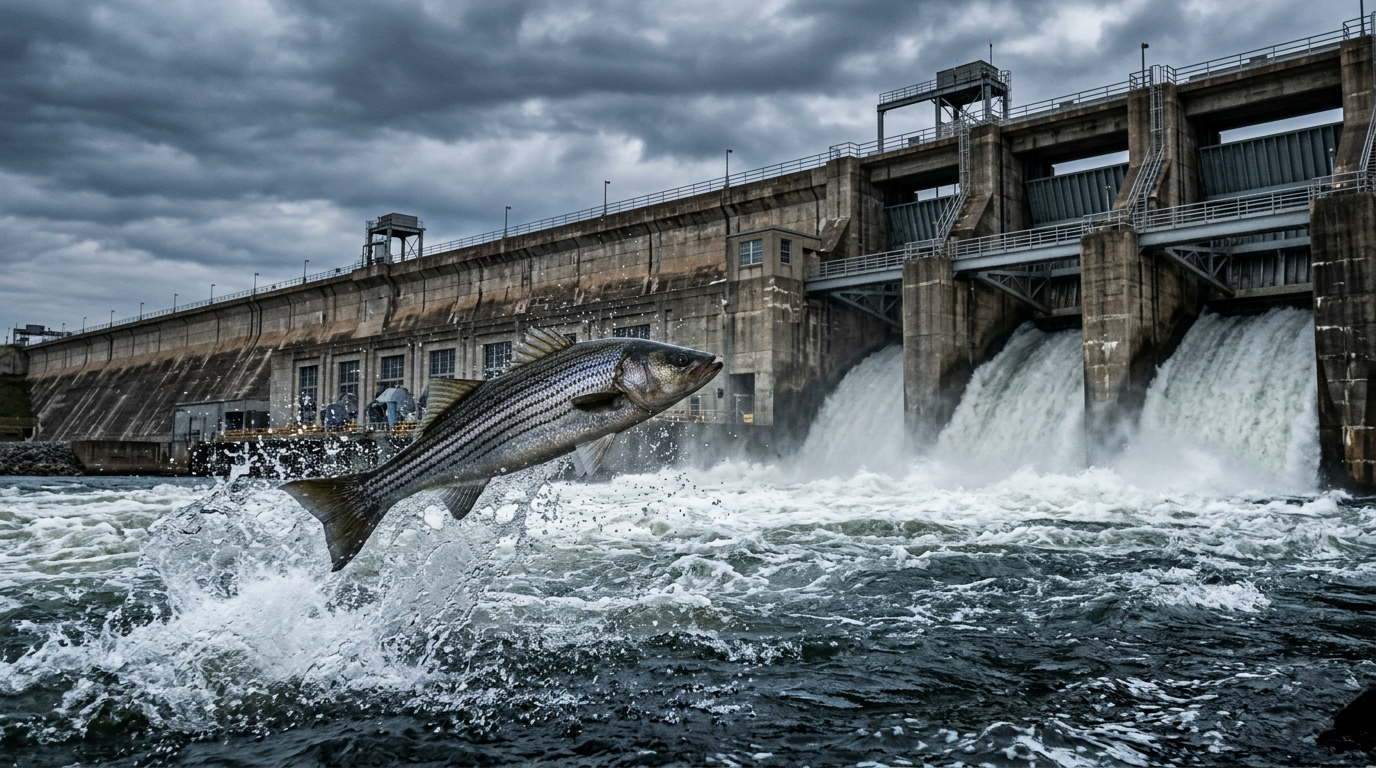
Striped bass and dam tailwaters are a perfect match. Landlocked stripers — stocked in reservoirs across the South and Midwest — are hard-wired to chase running water and shad, and dam tailraces deliver both in abundance. Below the right dam at the right flow, you can catch 20, 30, even 40-pound fish from the bank.
The challenge is figuring out when and where they'll be. Here's the full playbook.
Why Striped Bass Love Dam Tailwaters
Stripers are migratory fish that instinctively follow bait. In a reservoir, dam tailwaters are one of the few places where they encounter the two things that trigger a feeding response: current and concentrated baitfish. Specifically:
- Shad and skipjack killed by turbines drift into the tailrace as easy, high-calorie meals. Big stripers cruise the disoriented school like sharks.
- Cooler, oxygenated water below dams provides summer refuge when reservoir surface temps climb above the comfort zone for stripers (above ~75°F).
- Current seams let stripers station in slower water and ambush bait washing through — the same feeding behavior their coastal ancestors use in tidal rivers.
Step 1: Check Generation Before Every Trip
Striper fishing below dams is almost entirely flow-dependent. Use the Catch Dam Fish flow tools to check the current release schedule. Here's what the different conditions mean for your fishing:
- Generation just turned on — one of the best windows. The sudden current pulse pushes bait downstream and puts stripers on the feed immediately. Get to the bank fast.
- Steady moderate generation (1–4 units) — ideal. Current is strong enough to concentrate bait but not so heavy that stripers burn too much energy holding position.
- Maximum generation / flood discharge — very fast, dangerous water. Most fish drop back to the first pool below the immediate tailrace. Adjust location accordingly.
- No generation — stripers may still cruise the tailrace early morning or at night, but midday action typically dies. Use this time to scout structure.
Step 2: Where Stripers Hold in the Tailrace
- Current seams directly below turbine outflows — the number one spot. Stripers station on the downstream edge of the fast water, darting in to grab bait. Cast into the fast lane and let your lure sweep through.
- Deep scour holes 50–200 yards below the dam — big fish rest here between feeding bursts. Work the edges of the hole with deep-diving presentations.
- Wingdam and jetty tips — any concrete or rock structure that redirects current creates a productive downstream eddy. Stripers stack just off the tip in the soft water.
- First wide pool below the immediate tailrace — when generation is very heavy, this is where the fish hold. It's often 300–800 yards below the dam and overlooked by most anglers.
Step 3: Top Lures and Presentations
Stripers below dams respond to lures that match the size and movement of shad:
- Large swimbaits (4–6") — paddle tail or shad-body style swimbaits on a 1–2 oz jighead are the go-to for covering the water column in current. White, pearl, or shad-gray patterns work year-round.
- Heavy spoons (1–2 oz) — cast across current seams and let the spoon flutter downstream on a tight line. Chrome and white are top colors. Excellent when stripers are surface-busting shad.
- Bucktail jigs (1–3 oz) — a classic tailwater lure. Cast upstream, let it sink, and hop it back through the current. The pulsing action in moving water is irresistible to feeding stripers.
- Live or fresh-dead skipjack / shad — when the bite is tough, nothing beats a large fresh baitfish. Drift it under a float or free-line it into the current seam near the dam face.
- Topwater lures (dawn and dusk with active generation) — when stripers are crashing shad on the surface, a Heddon Zara Spook or large pencil popper will draw explosive blowups.
Step 4: Casting Angles and Retrieve in Current
Retrieves that work in still water often fail in tailwaters. Follow these principles:
- Cast across or slightly upstream — let the current swing your lure through the strike zone naturally. This keeps it in front of fish longer than a straight downstream cast.
- Reel just fast enough to feel the lure — in current, the water does most of the work. Too fast a retrieve pulls the lure out of the feeding zone; too slow and it tumbles unnaturally.
- Vary your depth — count your lure down to different depths on successive casts until you find where the fish are holding in the water column.
Gear for Big Tailwater Stripers
- 7'–8' medium-heavy to heavy casting or spinning rod with a fast tip for long casts and leverage on big fish.
- 30–50 lb braid — essential for casting heavy lures and handling fish in fast current without breakoffs.
- 20–30 lb fluorocarbon leader (3–4 feet) — stripers can be leader-shy in clear tailwaters. Fluorocarbon's near-invisibility helps.
- Heavy-duty hooks — replace factory trebles on spoons and topwaters with quality 2X strong hooks. A 30-pound striper in fast current will straighten cheap hardware.
Seasonal Timing
- Spring — stripers push toward the dam searching for their blocked migration route. This produces some of the most aggressive surface feeding of the year.
- Summer — heat drives stripers to the coolest, most oxygenated water right below the turbines. Early morning and late evening generation windows are prime.
- Fall — shad begin their fall die-off and stripers follow. Some of the biggest fish of the year are caught in October and November below dams.
- Winter — stripers slow down but don't stop feeding. Midday generation windows in the 45–55°F range can produce big fish on slower presentations.
Safety Around Striped Bass Tailwater Spots
The same fast water that concentrates stripers is dangerous. Always:
- Monitor live release data and keep one eye on river conditions while you fish.
- Wear a wading belt and life jacket when wading tailwaters.
- Never stand on slippery rocks close to the main current during generation — the footing can give without warning.
- Read our safe water levels guide before wading any new tailwater.
Log the Flows, Find the Pattern
The best striper anglers below dams keep a log of which generation levels, times of day, and seasons produced fish. Over time, patterns emerge that make every trip more predictable. Start building yours with the Catch Dam Fish dashboard.