
Species Playbook
← Back to all guidesHow to Catch Catfish Below Dams
Published on: April 10, 2026 · Approx. 9 minute read
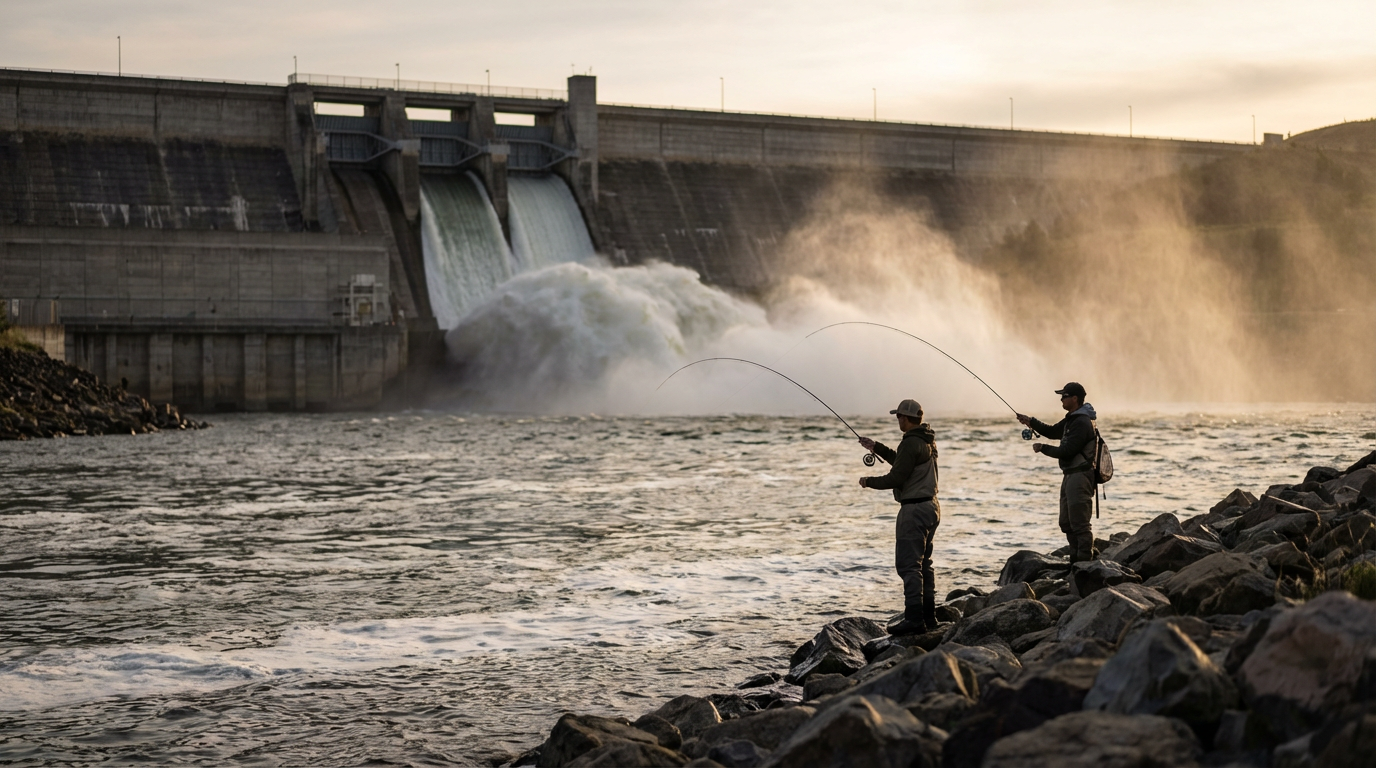
Dam tailwaters are among the most productive catfish spots in the country. The turbines and spillways churn up baitfish, invertebrates, and organic matter, creating a constant buffet that draws channel cats, flatheads, and blue catfish in massive numbers.
The key is understanding how flow changes trigger feeding. When you pair that knowledge with the right rigging and bait, you can put a cooler full of cats on even weekday trips.
Why Dams Are Catfish Magnets
Three things make dam tailwaters uniquely productive for catfish:
- Oxygenated water — turbines and spillways push highly oxygenated water downstream, which catfish (and their prey) prefer, especially in summer.
- Constant food delivery — shad, skipjack, and other baitfish get disoriented or killed passing through turbines and wash into the tailrace as easy meals.
- Deep scour holes — the hydraulic force below dams carves out deep holes where big flatheads and blue cats hold during the day.
Step 1: Read the Release Schedule Before You Go
Catfish feeding behavior is directly linked to water movement. Use the Catch Dam Fish flow tools to check the release pattern before your trip. The best windows are:
- When generation turns on — the sudden increase in current kicks up bottom sediment and disorients baitfish. Catfish move up from holes and start actively feeding within 30–60 minutes.
- Just after generation stops — as current slows, catfish slide into eddies and soft water behind structure to pick off stunned baitfish that drift down.
- Night releases — if the dam runs a consistent nighttime generation schedule, catfish often learn the pattern and stack up in advance.
Step 2: Find the Right Spots
Tailwater catfish use very specific areas depending on the season and flow level:
- Deep scour holes directly below the dam — prime daytime holding water for blue cats and flatheads. Fish the edges of the hole where flat bottom meets the drop.
- Eddies and current breaks — any boulder, wingdam, point, or concrete structure that creates soft water behind it will hold channel cats waiting for food to drift by.
- Riprap banks — rock-lined banks provide ambush cover and stay cooler in summer. Channel cats cruise riprap aggressively after dark.
- First long pool downstream — when flows are very high and the immediate tailrace is too turbulent, big cats often drop back to the first wide, slower pool a quarter mile or more below the dam.
Step 3: Best Baits for Tailwater Cats
Tailwater catfish are conditioned to eating whatever the dam washes through. Match that with these proven options:
- Fresh-cut skipjack or shad — the single best option below most large dams. Use a cast net to catch your own from the tailrace for the freshest possible bait.
- Live or fresh-dead bream / bluegill — top choice for flatheads. Hook through the back and position near the edge of deep scour holes.
- Chicken liver — classic channel cat bait that works well in moderate current; use a mesh bait bag or sponge hook to keep it on.
- Punch bait / dip bait — thick, smelly prepared baits excel for channel cats in eddies and soft water, especially in summer.
Step 4: Rigging for Current
Standard bottom rigs need a few tailwater-specific adjustments to stay put and detect bites:
- No-roll sinker or bank sinker — flat or pyramid sinkers hold bottom better in current than round egg sinkers that roll and tangle.
- Slip-sinker rig — lets a catfish pick up the bait and move without feeling resistance, improving hook-up rates in heavy current.
- Heavier than you think — in active generation, 3–6 oz sinkers are often needed to hold bottom. Start heavy and work lighter once you find the sweet spot.
- Circle hooks (7/0–10/0) — reduce gut hooks and improve catch-and-release survival if you're not keeping fish.
Step 5: Rod Setup and Bank Positioning
Tailwater catfishing is usually a multi-rod game from the bank:
- 7'–8' medium-heavy to heavy rod with a baitcasting reel spooled with 30–65 lb braid.
- Rod holders or spikes — keeps rods secure when a big blue cat hits and runs.
- Fan cast different depths — put one rod tight to fast current, one on the seam, one in the eddy. Let the fish tell you where they're holding that day.
Seasonal Notes
- Spring — pre-spawn channel cats feed heavily and are spread throughout the tailrace. Blue cats also start moving shallow.
- Summer — heat pushes big blues into the deepest, most oxygenated water right below the dam. Night fishing is most productive.
- Fall — shad die-offs below dams create feeding frenzies. Some of the year's biggest blue cat catches happen in October and November.
- Winter — fish slow down but big cats still feed during midday generation pulses. Target the deepest holes with fresh-cut bait.
Stay Safe Around Tailwaters
High current is the biggest hazard for catfish anglers below dams. Always:
- Check live flow data before and during your trip for sudden generation increases.
- Wear a life jacket when wading any depth of tailwater.
- Never wade during heavy generation — wait it out from shore.
- Post a safety contact who knows your location and expected return time.
Track the Flows, Catch More Cats
The anglers who consistently hammer catfish below dams are the ones who check release charts the night before and adjust their timing accordingly. Use the Catch Dam Fish dashboard to watch generation schedules at your local dam and build a log of which flows produce your best catfish action.